Monday, January 23, 2017

Title:  It's All About Me - How I Best Learn!
Due Date:  Friday, February 3, 2017


Everyone has a unique combination of experiences, expectations, and abilities.  This allows us to showcase the particular qualities that make us individuals.  However, in education, often times there is an unwritten expected mold that students are supposed to fit into.  If your background, knowledge and skills plays to this expectation, then you will be rewarded with academic success.

What about the students that do not fit into the mold?  How do teachers make them feel valued and accepted?  What if you are one of those students who needs a climate where your differences are fostered?

As you begin to uncover your learning preferences and the characteristics that allow you to learn best, record the following information on a blog post.  You will update this blog post regularly as we add new information in class.

Be sure to begin with a title (above) and include a reference to this blog post.

My Learning Style(s)
After taking the learning styles indicator on Career Cruising, indicate your preferred learning style(s). Post a brief description in your own words of what characterizes your style(s). Discuss activities next to each of your styles that you especially like to do.  For example, if you are an auditory learner, you might indicate that you enjoy reading passages from a novel aloud in your English class.  Add a screenshot of your Learning Styles graph to your blog.  Add a media source.

My Multiple Intelligences


Add the Multiple Intelligences (2 - 4) in which you had the highest scores.  Explain briefly what each of them mean about you related to the way you like to learn.  Give an example of a learning activity or strategy that would suit you. For example,  a person with musical intelligence may like to write a song and perform it rather than write a report.  Add a screenshot of your Multiple Intelligences graph to your blog.  Add a media source.


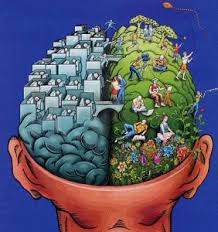
My Hemisphericity Preference
Indicate the side of the brain you prefer to draw upon to learn.  List 5 characteristics that learners who use this side of the brain usually exhibit?  What dialogue might you be caught using with your teachers?  Add a media source to feature in this area. 


My True Colors
Indicate your "True Color".  Add a list of 10 bulleted words or phrases that best describe you from the scoring tool.  Describe what a bad day looks like for you using information from the references provided.  Add a media source. 


Monday, January 9, 2017

Blog Title:  My Biggest Challenge as a Future Teacher

Blog due:  Wednesday, January 13

Recently you watched the video, Beyond the Blackboard, chronicling the teaching journey of Stacey Bess at the School With No Name.  Throughout her first year, she encountered many challenges and hurdles as she tried to help the children succeed academically. 

Think about your future as a teacher.  What are two of the biggest hurdles or challenges you think you might encounter?  Describe how each challenge will affect the academic progress of your students.  What steps can you take to deal with each of these hurdles or challenges?

Note:  Be sure to reference Mrs. Kallas's blog post.  Add at least 1 additional source of media.  It may be a pic, an embedded video, or a link to a related article.

Click here to see what others think are major challenges.

Here are some more ideas about what challenges teachers face.

These ideas may give you a different perspective on classroom challenges.

Tuesday, November 29, 2016

Blog due Friday, December 2


Title:  Early History of Education in America

You've studied it, read about it, and made note of the important points of the beginnings of American education through the Depression.  Now it's time to show what you know.  Select one (1) of the following prompts and create a post that shows your understanding education during that period.  Be sure that you answer the prompt.

Image result for early schoolhouseA.  One-room schoolhouses with a single teacher responsible for all grades developed in rural areas with limited population.  A few of these schools still exist.  If you were teaching in such a school now, how could technology help you manage to teach students at so many different levels.

B.  During the Great Depression of the 1930s, some teachers continued to work for little or not pay.  What do you think motivated them?  How do you think you would react as a teacher, if a similar situation occurred?  What factors would you weigh as part of you decision?

Image result for early schoolhouseC.  Throughout the early history of education in America, teachers were held in great respect and were expected to be role models for students.  In your opinion, how are teachers regarded today?  Give reasons for your views.

Notes:  You must answer the prompt - don't go off on a tangent.  You must make reference and create a pathway to this prompt.  You must include at least one additional source of media (pic, photo, link, etc.)

Wednesday, November 2, 2016

The Water is Wide Reflection

Now that you have viewed the video about a young controversial school teacher and his unconventional style used to inspire children, reflect on the questions below.  Select 4 and post the responses on your blog.  Note: Each part of Question 6 counts as an individual question.  (20 points each.) Questions must be answered using standard rules for good writing.  Be sure to number your responses.  If not, you will need to copy the questions.

Learn how to link the original blog prompt to your post.  
(20 points if done properly)
(10 points if link is present but labeled wrong)
(0 points for no link to blog prompt.)


Questions to Ponder:
  1. In what ways has education changed since the 1960s?
  2. In what ways has it stayed the same since the 1960s?
  3. Describe a teacher you know or knew who is or was very conventional and is or was tied to doing things the way they have or always had been done. (Do not use real names.)
  4. Describe three ways that Mr. Conroy inspired his children to learn that were unconventional.
  5. How did he get the community to support the school?
  6. What roadblocks did he encounter with
    1. the children?
    2. his coworker?
    3. the community?
  7. What attributes did Mr. Conroy have that were characteristics found in most effective teachers? (List at least 5 and explain with example from the movie.)
  8. What idea/thought do you carry away from this movie that you will apply to your future career?

Tuesday, October 4, 2016

An Interview with Mrs. Kallas

Read about my interview and observation with Mrs. Kallas below.  I hope you enjoy the facts I discovered.